End of line work affects the whole plant
Primary packaging receives most of the attention because it is closest to the product. The case packing area is often where the finished package either keeps its rhythm or begins to back up.
Manual case loading can be flexible, but it also depends on staffing, ergonomics and repeatable handling. When production grows, those small variations can show up as missed cases, crushed packs, unstable counts or extra rework.
Automation adds control after the primary machine
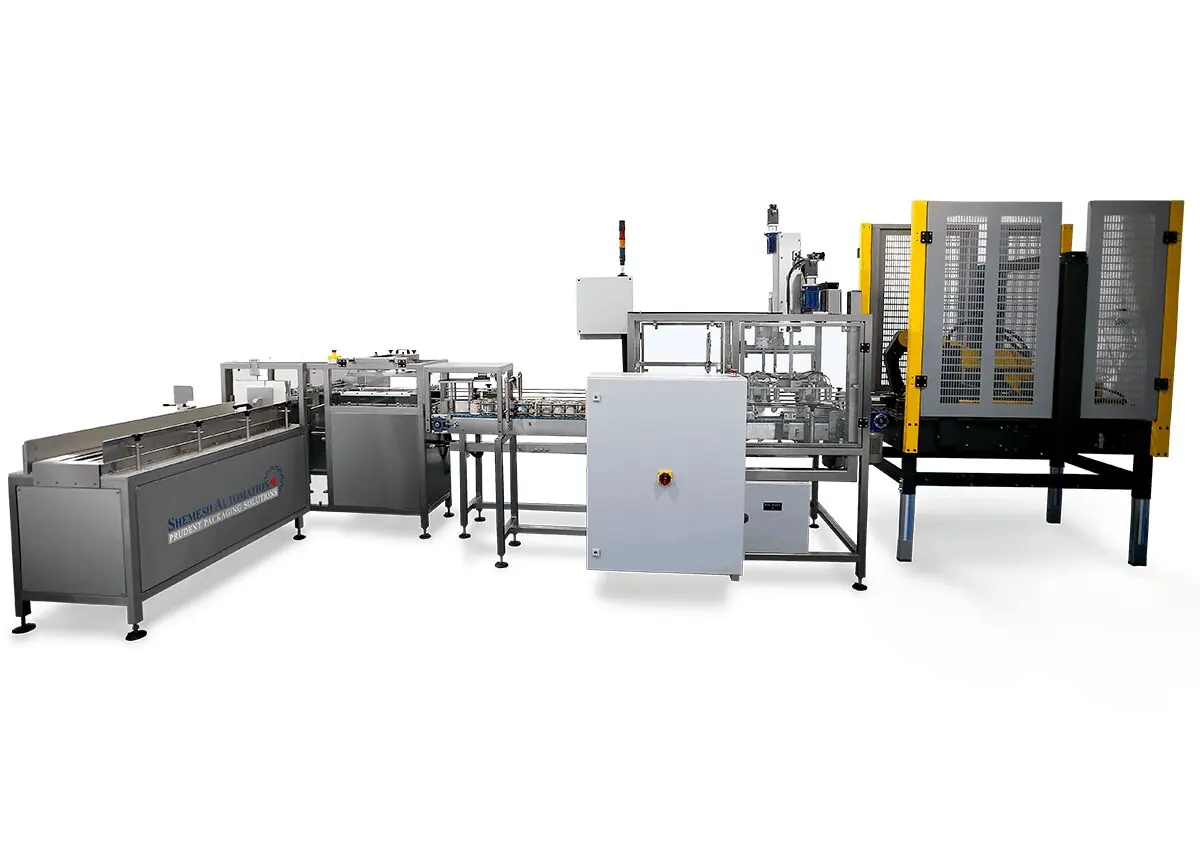
A case packing system can collate packages, orient them, load them into the case and hand them off to sealing, coding and palletizing. The goal is not only speed. It is a cleaner transfer from finished package to shipping unit.
The best layouts match the actual pack shape, case style, count pattern, upstream discharge and available floor space. Robotic, mechanical and hybrid designs each have a place depending on those details.
Labor savings should be estimated honestly
Case packing projects are often justified by labor, but the useful calculation includes more than headcount. It should include shifts, overtime, ergonomics, case quality, rework, changeover time and whether operators can be moved to higher value work.
Pure can help build an estimate from the plant's own inputs so the payback discussion stays grounded in real operation data.
The strongest upgrade is planned as a line section
Case packing performs best when it is not treated as an isolated machine. Infeed, grouping, reject handling, corrugated supply, sealing and palletizing all need to be considered together.
That complete view is what turns a case packer from a standalone purchase into a reliable end of line strategy.