
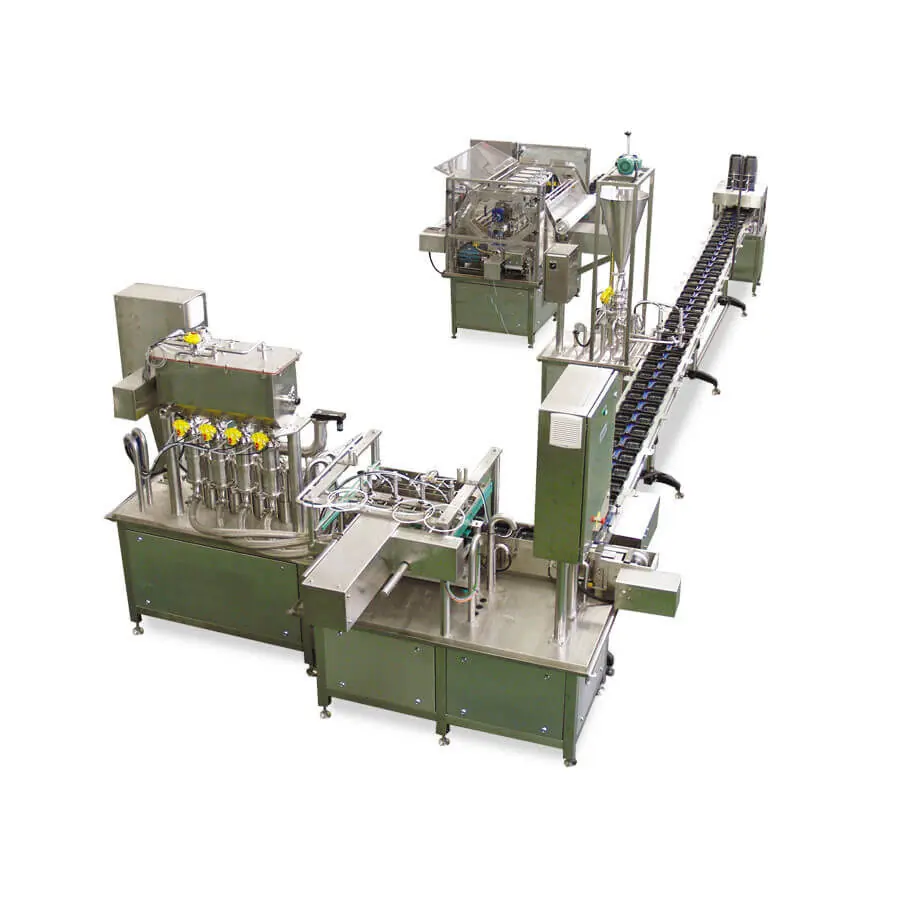
Cup & Tray Packaging Solutions
Modified Atmosphere Packaging Systems
Gas flushing and vacuum MAP for rigid cups, containers and trays — engineered into your filling and sealing process and integrated with your packaging line.
Understanding MAP
What is modified atmosphere packaging?
Modified Atmosphere Packaging (MAP) replaces or adjusts the air inside a package with a selected food-grade gas atmosphere before sealing. It helps manage oxidation and product deterioration when the atmosphere, packaging materials and storage conditions are matched to the product.
Pure offers MAP systems for preformed cups, rigid containers and trays, from gas flushing to vacuum and gas replacement. MAP is available across our rigid-container and tray sealing machines and can be integrated into different production lines.
MAP Methods
Gas flushing or vacuum and gas replacement
Two approaches to atmosphere control. The right choice starts with your product and package, not a one-size-fits-all gas recipe.
Gas flushing MAP
Food-grade gas is introduced into the package to displace air before the lid or film is sealed. Gas delivery, headspace and sealing timing are coordinated with the filling cycle.
Consider when a gas-displacement process meets your product's atmosphere requirements. Achievable residual oxygen depends on the package, gas flow, product and process settings and must be verified with actual packs.
Vacuum and gas replacement MAP
Air is withdrawn in a controlled sealing environment, then the selected gas mixture is introduced before sealing. This combines evacuation and gas replacement rather than relying on gas displacement alone.
Consider when the application requires more controlled air removal. Vacuum level, gas replacement and cycle time must be matched to the product to avoid foaming, deformation or disturbance of delicate contents.
Engineered by Pure
A unique MAP system, proven in production
Developed by Pure's engineers and proven across hundreds of system lines, our MAP system brings together processing efficiency, reliable operation, easy cleaning and low maintenance.
Faster MAP processing
An engineering-led approach to gas delivery and sealing-cycle coordination, designed to keep the MAP process moving efficiently within the production line. The achievable rate is confirmed for your application.
Reliable operation
Pure's unique MAP system was developed by its engineers and has been proven across hundreds of system lines. The configuration is matched to the product, container and sealing process.
Easy cleaning
Ease of cleaning is a central part of the system design, supporting the hygiene routines of cup and tray packaging operations. Cleaning requirements are reviewed with your team before specification.
Low maintenance
The system is developed for low-maintenance operation, with practical service needs considered alongside production requirements. Maintenance scope is confirmed for the selected configuration.
Packaging Types
MAP for cups, containers and trays
Pure's MAP systems are built for preformed rigid packages. The right gas delivery and sealing setup depends on the package format, its barrier and how the product is filled.
Preformed cups
Dairy, dips, sauces and prepared foods in preformed cups can be filled and sealed under a selected gas atmosphere. Gas delivery and sealing timing are coordinated with the filling cycle on inline servo, pneumatic and rotary platforms.
Cup material, rim profile and lidding film influence seal integrity and how well the atmosphere is retained through chilled distribution.
Rigid containers
Rigid containers such as bowls and other preformed formats can be filled and sealed with gas flushing or vacuum and gas replacement, with the atmosphere configured to the container geometry and headspace.
Container depth, headspace and product behavior during filling affect how the atmosphere is introduced and how much air remains before sealing.
Trays
Rigid trays for fresh produce, protein and prepared meals can be sealed under a modified atmosphere using a compatible lidding film or pre-cut lid, with the gas blend matched to the product.
Tray dimensions, film permeability and product respiration influence the gas mixture and the achievable residual oxygen, which must be validated with actual packs.
Compatible Equipment
MAP for cup and tray sealing machines
Available on inline servo, pneumatic and rotary cup systems, as well as tray sealers. Gas flushing or vacuum MAP is configured to the container, product and required production rate.
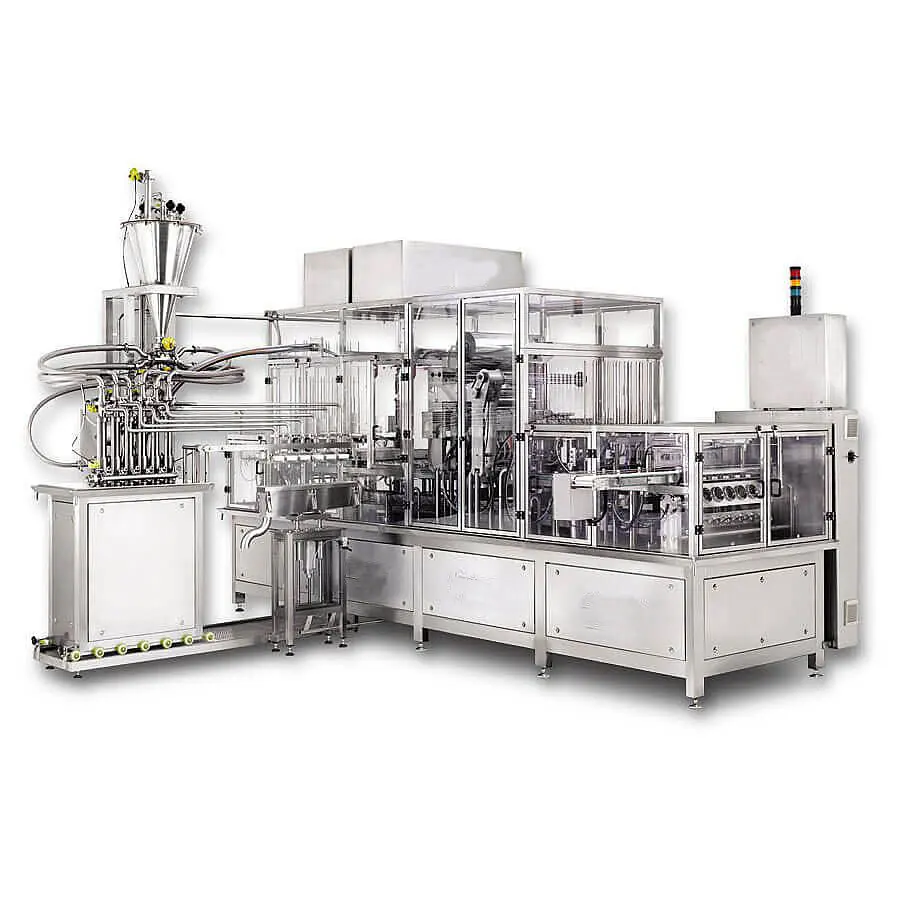
Inline Servo Filling and Sealing Machine
Available with application-configured MAP. Explore the filling and sealing platform and discuss the right atmosphere-control method for your product.
Explore machine
Pneumatic Inline Filling and Sealing Machine
Available with application-configured MAP. Explore the filling and sealing platform and discuss the right atmosphere-control method for your product.
Explore machine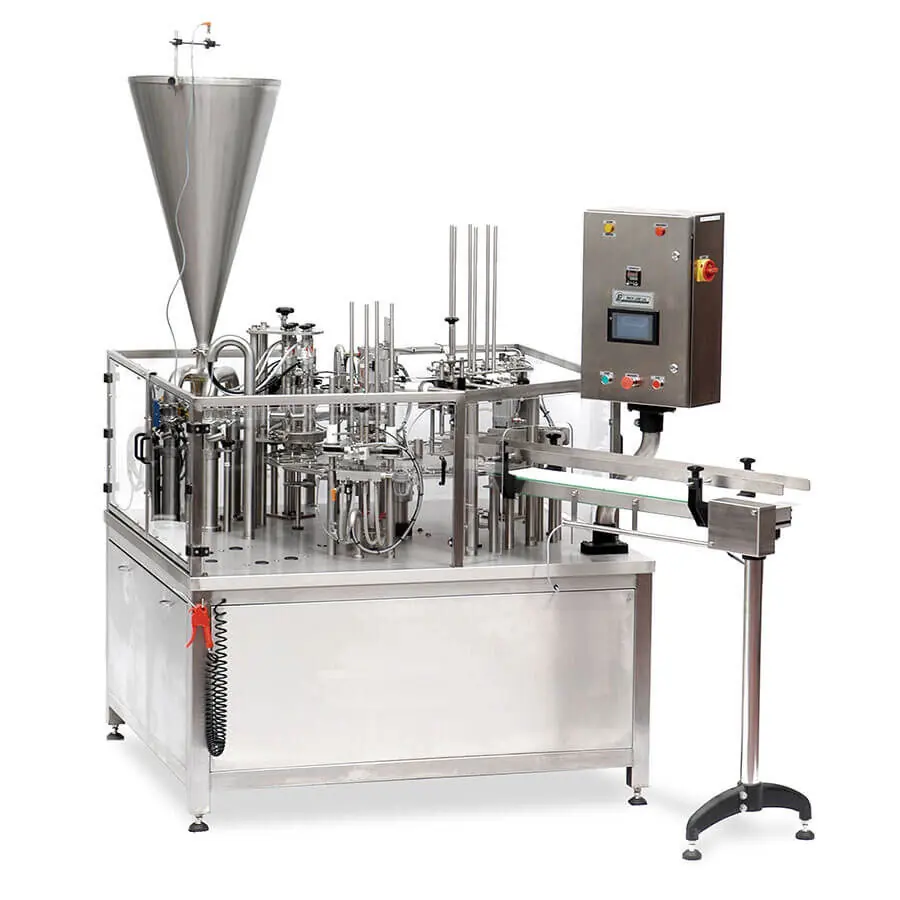
Rotary Filling and Sealing Machine
Available with application-configured MAP. Explore the filling and sealing platform and discuss the right atmosphere-control method for your product.
Explore machine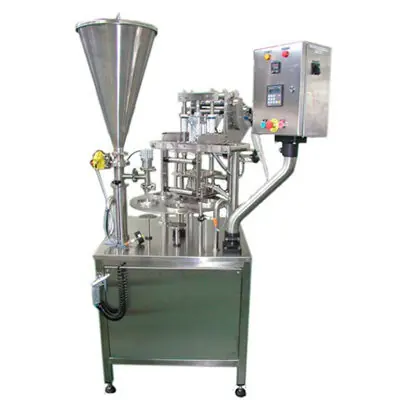
Small Rotary Filling and Sealing
Available with application-configured MAP. Explore the filling and sealing platform and discuss the right atmosphere-control method for your product.
Explore machineTray Sealer
Available with application-configured MAP. Explore the filling and sealing platform and discuss the right atmosphere-control method for your product.
Explore machineApplications
Product needs shape the atmosphere
MAP is part of a complete food-packaging process. Product trials and package validation determine the appropriate settings and realistic results.
Prepared meals and chilled foods
Multi-component products need a gas mixture and sealing process matched to the recipe, headspace and chilled distribution conditions. Keep food away from the sealing flange to support seal integrity.
Dips, sauces and dairy products
Viscous products, particulates and foaming affect filling and atmosphere control. Vacuum suitability and gas delivery must be assessed against product behavior and the final cup format.
Fresh produce and cut vegetables
Respiring products require particular care with gas composition and film permeability. The atmosphere must be evaluated with the product and storage conditions rather than applying a generic low-oxygen recipe.
Protein and other tray-packed foods
Product appearance, oxidation, drip and microbiological requirements influence the gas blend and package selection. The complete package and cold-chain conditions need validation.
How It Works
From filled container to sealed MAP package
- 1Present the filled cup or tray with a clean sealing flange
- 2Displace air with gas, or evacuate and replace it with gas
- 3Seal the compatible lid or film to retain the atmosphere
- 4Verify package atmosphere and seal integrity through your quality-control plan
Line Integration
Add MAP to your packaging process
Pure engineers, specifies, supplies and integrates packaging equipment and complete automation systems. MAP can be incorporated into a new cup or tray line, or evaluated as an addition to an existing installation.
We review filling, gas delivery, sealing, controls and downstream handling together. This includes coordination with denesting, coding, inspection, conveyors and case packing, as well as installation, commissioning, operator training and ongoing parts and service support.
Selection Checklist
How to specify a MAP system
Bring these details to the application review so the atmosphere-control method, sealing platform and line requirements can be evaluated together.
- Product, recipe, filling temperature and storage conditions
- Rigid container or tray dimensions, material and headspace
- Lidding film or pre-cut lid, barrier properties and seal requirements
- Desired gas mixture and residual oxygen target, if already established
- Shelf-life objective and product-validation plan
- Required production rate and number of lanes or formats
- Available food-grade gas supply and site utilities
- Cleaning procedures, changeover frequency and maintenance access
- New line or existing equipment, upstream/downstream interfaces and timeline
Modified atmosphere packaging questions
What is a MAP system?
MAP stands for Modified Atmosphere Packaging. A MAP system changes the gas atmosphere inside a package before sealing, using gas flushing or vacuum followed by gas replacement. It is configured around the food, container, sealing material and storage conditions.
What is the difference between gas flushing and vacuum MAP?
Gas flushing displaces air by introducing a selected gas mixture. Vacuum MAP first removes air in a controlled environment and then introduces the gas mixture before sealing. The choice depends on the atmosphere target, product sensitivity and required cycle time.
Which Pure machines can include MAP?
MAP is available across Pure's rigid-container and tray sealing machines, including inline servo, pneumatic and rotary cup filling and sealing systems and tray sealers. The MAP method and tooling are specified for the individual application.
Can MAP be added to an existing packaging line?
MAP can be integrated into different packaging lines. Adding it to an existing machine requires review of the sealing station, tooling, controls, space and utilities. Compatibility and any modifications are confirmed before a retrofit is proposed.
Which gases are used for modified atmosphere packaging?
Food-grade nitrogen, carbon dioxide and, for some applications, oxygen are commonly used alone or in mixtures. Each gas has a different role. The blend must be selected and validated for the product; there is no universal mixture suitable for every food.
Does MAP guarantee a longer shelf life?
No fixed shelf life can be promised from the machine alone. MAP can help manage oxidation and product deterioration, but results depend on the food, hygiene, gas blend, package barrier, seal integrity and storage conditions. MAP does not replace refrigeration, food-safety controls or shelf-life testing.
What information is needed to specify a MAP system?
Share your product, cup or tray dimensions, sealing material, target production rate, gas or residual-oxygen requirements if known, storage conditions, cleaning needs and installation timeline. For an existing line, include machine details and photographs so Pure can review the integration scope.
Tell us about your MAP application
Share your product, cup or tray format, sealing material, desired output and atmosphere requirements. Pure will review the application and recommend a MAP configuration for your machine or complete line.