The Shelf Life Target Is Clear. The Failure Mechanism Is Not.
Product is reaching its quality limit before the required distribution window closes. The temptation is to specify modified atmosphere packaging, or MAP, immediately. First establish what ends usable life: oxidation, microbial spoilage, moisture movement, physical damage or something else. Changing the atmosphere will not solve every mechanism, and an attractive package is not evidence of a safe product.
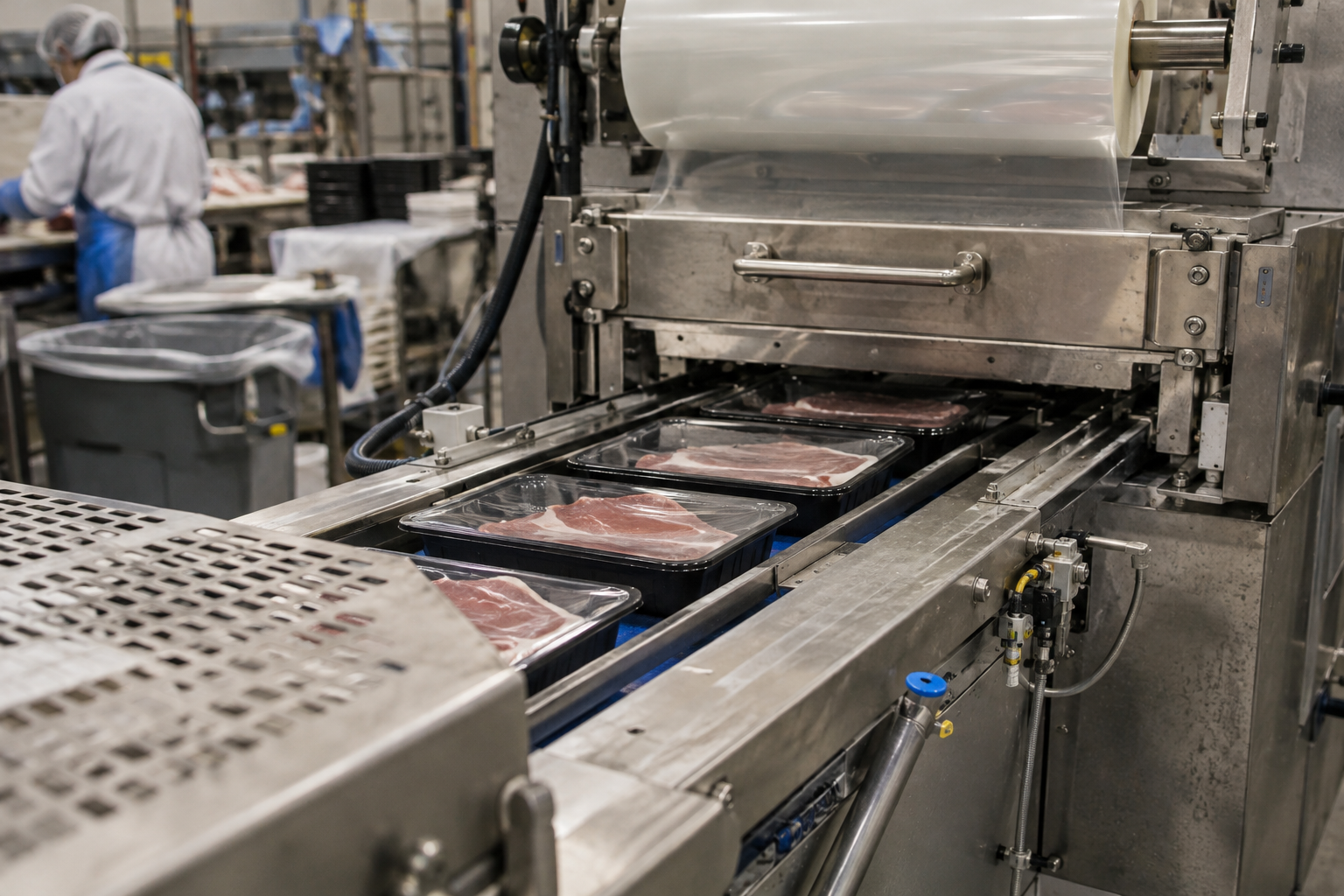
Compare a conventional sealed tray with an appropriate MAP approach using the actual formulation, fill temperature and storage conditions. Gas flushing and vacuum followed by gas replacement offer different tradeoffs in atmosphere control, product disturbance and cycle time. Delicate products may react poorly to pressure changes. Carbon dioxide absorption can also change headspace composition and package appearance after sealing.
Define trial acceptance with quality and food safety personnel before running samples. Measure the atmosphere after sealing and through storage, alongside seal integrity and relevant product quality attributes. For foods requiring refrigeration, MAP does not replace temperature control or a validated safety program. Pharmaceutical and personal care applications need their own product protection and package compatibility criteria rather than borrowed food shelf life assumptions.
The Seal Passes on Clean Trays but Fails During Production
Intermittent leaks appear once production introduces sauce, dairy residue, powder or product fragments onto the tray flange. Raising sealing temperature may hide one symptom while creating film distortion, difficult opening or damage elsewhere. The problem could be contamination, tray flatness, tooling alignment, uneven pressure or an unsuitable film and tray combination.
Consider improving filling accuracy or flange protection before asking the sealer to tolerate everything upstream. A different sealant layer may provide a better process window, but it must still meet opening and compatibility requirements. Trial the complete material combination across a practical range of temperature, dwell and pressure, including startup and warmed operation.
Use both clean controls and representative production contamination. Inspect the full seal perimeter, then apply suitable leak and seal strength tests. These answer different questions: a strong seal can still contain a channel leak. Confirm that operators can recognize and contain suspect packages without relying solely on visual inspection.
A Material Change Saves Cost but Narrows the Operating Window
A lighter tray or replacement lidding film looks attractive until trays distort, denesting becomes inconsistent or gas retention changes. Package purchasing decisions affect machine operation. The least expensive component may increase scrap, handling problems or quality risk when used as part of the complete pack.
Compare candidate materials using agreed dimensional tolerances, barrier needs, seal compatibility and distribution conditions. A stiffer tray may handle more reliably but use more material. A higher barrier film may help maintain the atmosphere, yet barrier performance alone cannot compensate for leaks. Easy opening also needs to be balanced against package integrity.
Include representative material lots and actual label or sleeve arrangements in the trial. Check denesting, flange support, cutting, opening behavior and finished package appearance after storage and transport simulation. Ask suppliers to document material changes so an apparently equivalent substitution does not enter production without review.
The Sealer Runs Well, but the Line Cannot Keep It Fed
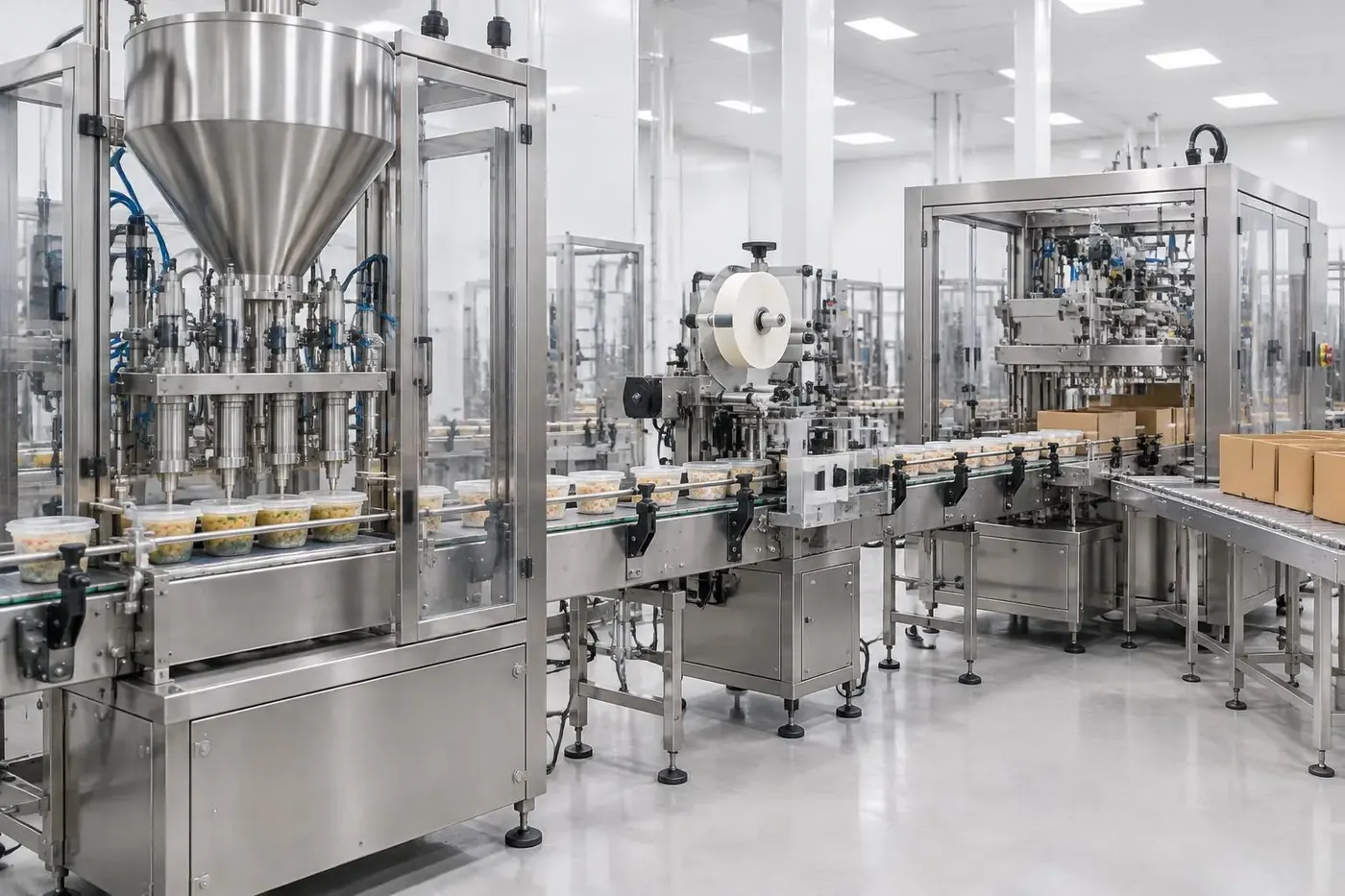
The machine demonstration is smooth, yet the planned line includes uneven manual loading, variable fill weights and downstream stoppages. Nominal machine output is not the same as sustained line output. Tray presentation, product handling and accumulation determine how often the sealer can complete a useful cycle.
Compare manual loading, assisted loading and automated transfer against the real product mix and staffing plan. More automation can improve consistency, but it can also add changeover work and make irregular products harder to handle. Run trials with upstream interruptions and downstream blocking, not just a continuous supply of perfect trays.
- Check tray orientation, spacing and stability at each transfer.
- Confirm utility capacity and pressure stability during representative operation.
- Observe what happens to loaded trays during stops and restarts.
- Verify reject handling and the disposition of packages made during interruptions.
A Good Trial Becomes a Difficult Daily Routine
Production loses time because a format change or cleaning task is harder than expected. Tooling flexibility is useful only if operators can change, clean and verify the system reliably. Compare dedicated tooling with shared arrangements based on the actual production schedule, not the number of formats a machine can theoretically accept.
Have plant personnel perform a representative changeover and cleaning sequence during evaluation. Check access, tooling handling, recipe control and first package approval. Include the records needed to release production after maintenance or sanitation.
Bring these findings to Pure Packaging Solutions through the [Tray Sealing and MAP page](/solutions#tray-sealing-map), where you can also request a quote. Include sample products, packaging drawings, acceptance criteria and operating constraints so the proposed system addresses the plant problem rather than just the sealing step.