How do you choose a case packer and end-of-line layout?
Start with the package, not the machine footprint. Establish what arrives at the packing station, how it must sit inside the case and what happens after loading. A layout should connect case preparation, product presentation, loading, sealing and palletizing without blocking material replenishment, cleaning or operator access. Compare options against your actual product and format mix. Performance depends on the product, format and configuration, so a drawing or equipment category alone cannot establish suitability.
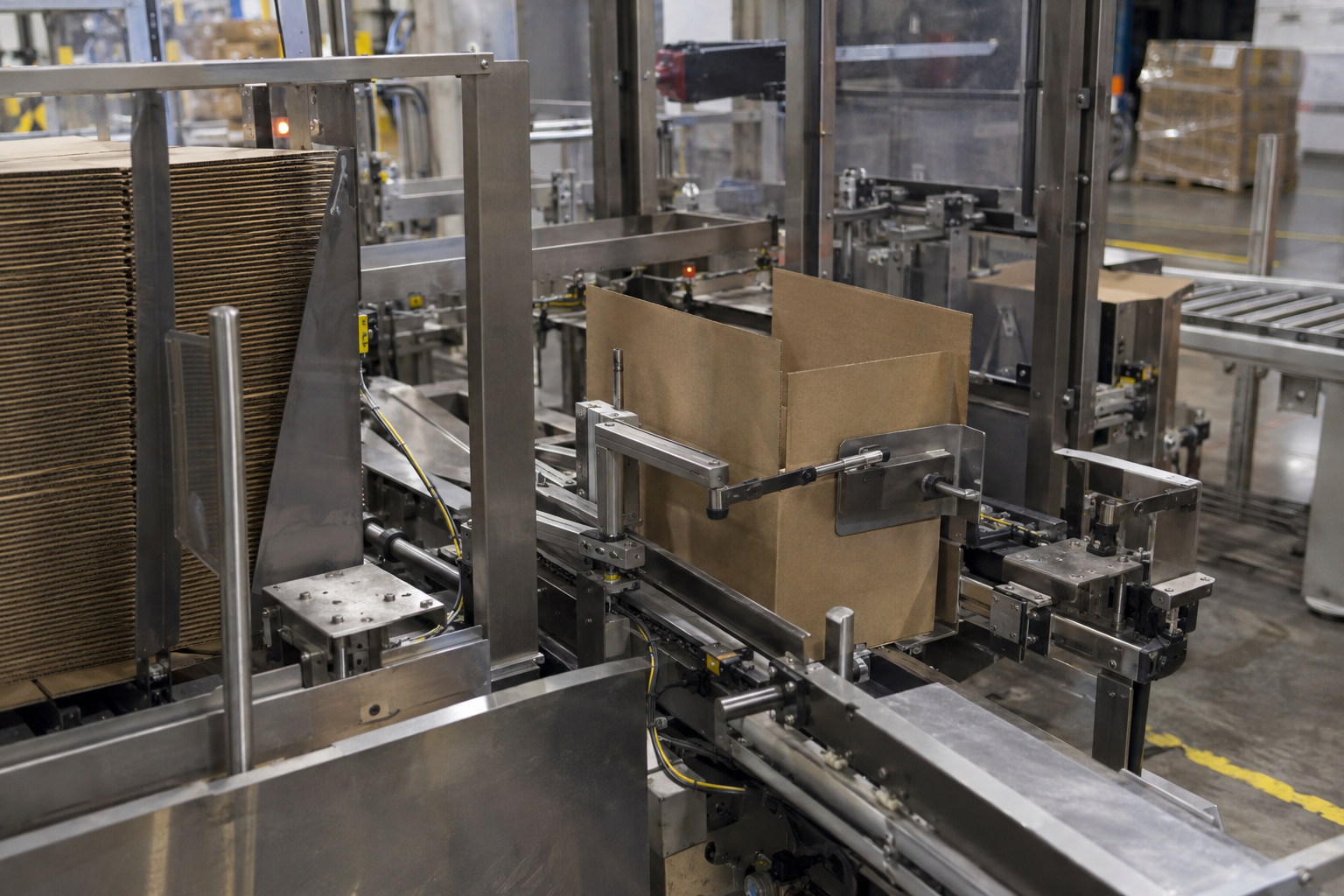
RSC case erector: When should cases be formed ahead of the packer?
Why does this method fit? An RSC case erector forms and bottom-seals regular slotted cases ahead of the packer. It belongs in the comparison when that is your specified shipping case and you need a defined case-preparation step before loading. Confirm the case dimensions, board condition and bottom-sealing requirements before planning the handoff. It may not fit if the chosen package is not a regular slotted case. Resolve the packaging format first rather than assuming all cartons and cases can use the same forming process.
What should a buyer ask? Ask how each intended case size is set up, which adjustments a changeover requires and how correct setup is checked before production resumes. Supply representative case blanks, including any that have caused trouble in current operations. In the layout, reserve access for replenishing blanks, clearing interrupted flow and cleaning around the machine. Establish how formed cases reach the packer, how their orientation is maintained and what each station does when the next one stops. Decide whether accumulation is needed from the operating sequence, not simply from available floor space.
Automatic case packing: Should you choose top-load, side-load or robotic loading?
Why choose one loading approach over another? Automatic case packing can use top-load, side-load or robotic loading depending on the pack and pattern. Compare the access each approach needs with the product orientation and finished arrangement. For top-load, examine whether the intended group can enter through the case opening without disturbing the pack. For side-load, examine the insertion path and whether the group remains stable during transfer. For robotic loading, ask how products would be presented, picked and placed. None is a universal winner, and the robotic label alone does not establish format flexibility.
When might an approach not fit? A method becomes a poor candidate if the proposed handling sequence cannot preserve product condition or achieve the required pattern in trials. Ask to see the sequence from incoming product through the completed load, including any grouping or reorientation required. For changeovers, identify the recipe settings, physical adjustments and format parts proposed for every SKU. Ask how operators verify the new pattern and gain access for cleaning. Integration questions should cover product spacing, case availability, transfer to sealing and the response to missing products or cases. Evaluate the connected process, not just the loading motion.
Bags in carton: What matters when loading flexible packs?
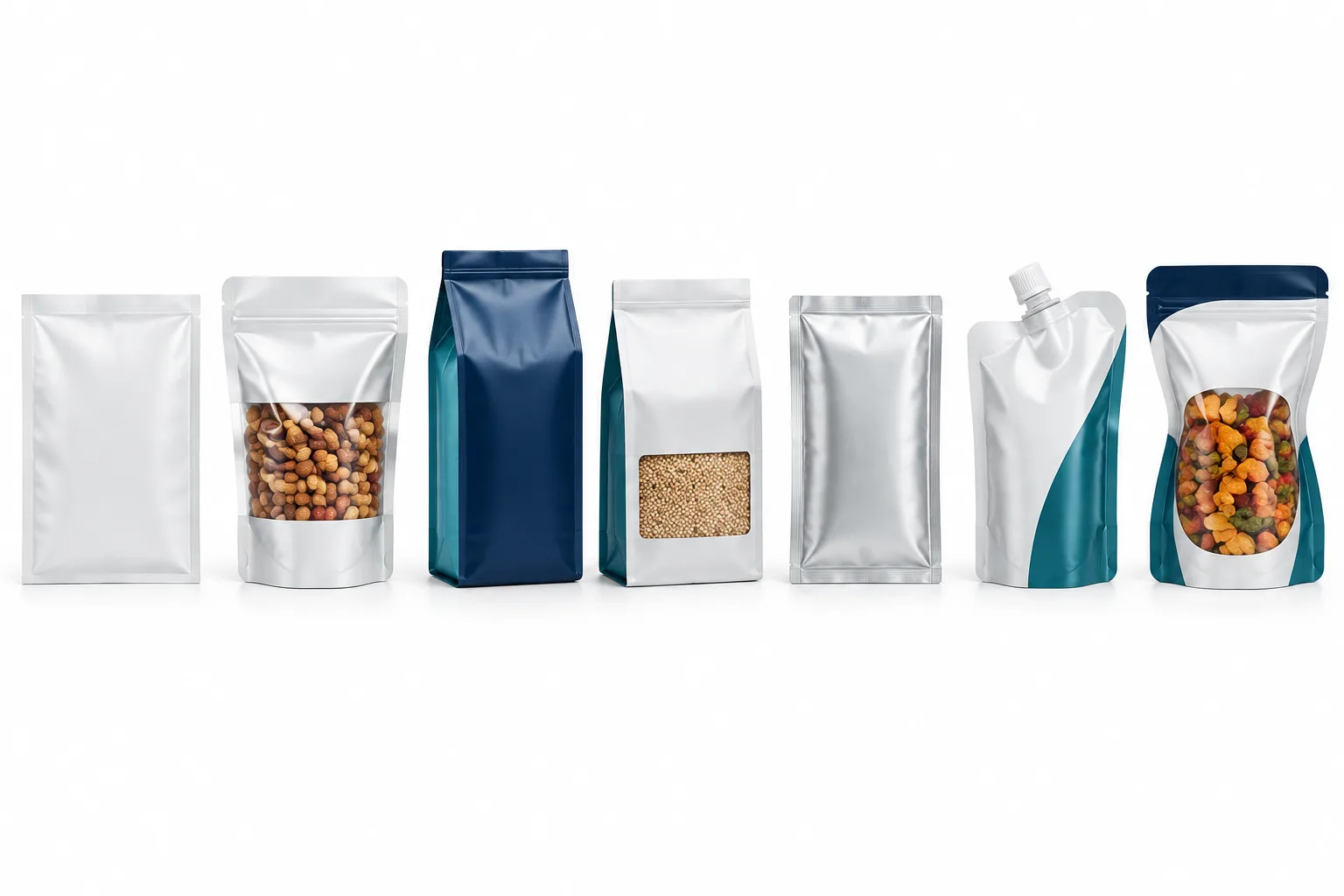
Why treat this as a distinct application? Bags in carton covers loading pouches and bags into cartons or cases. Flexible packs deserve their own evaluation because the incoming shape and the packed arrangement may differ. Examine filled samples rather than relying only on nominal pouch dimensions: assess how the contents settle, how much the pack bulges and where seals or closures sit. Compare the proposed loading method against the required count and orientation. It may not fit if trials show that the packs cannot enter and settle into the specified carton or case without unacceptable damage or distortion.
What should a buyer ask? Ask what incoming presentation is required and how the proposed configuration handles variation between actual filled bags. Include representative fills and formats in the evaluation, not just the easiest sample. For changeovers, establish what changes when bag dimensions, count or carton size change. Discuss access for removing trapped packs and cleaning any product residue following a damaged bag. At the interfaces, identify who controls grouping and counting, how cartons or cases are supplied and how the loaded pack reaches sealing. Define acceptable pack appearance and damage criteria before the trial.
Palletizing system: How should pallet building shape the layout?
Why include palletizing in the initial selection? A palletizing system builds pallet patterns after case sealing. Its requirements therefore belong in the layout discussion before the packer position is fixed. Start with the sealed case dimensions, weight, orientation and required pallet arrangement. Compare alternative patterns against your shipping and handling requirements rather than selecting a pattern for appearance alone. A proposed configuration may not fit if it cannot accommodate the required case mix or pallet arrangement, or if the installation leaves inadequate access for pallet movement and routine work.
What should a buyer ask? Ask how each pattern is defined, checked and selected during changeover. Establish which case and pallet variations the proposed configuration must accommodate. Map the sealed-case handoff, empty-pallet supply and completed-pallet removal, including what happens when removal is delayed. Keep operator routes, cleaning access and pallet traffic visible on the drawing. Ask how interruptions are communicated upstream and where cases would wait. Validate that arrangement against actual operating needs rather than assuming the packer and palletizing system will always run in step.
Final selection checklist: What should be confirmed before approval?
Confirm the product samples, packaging formats, case patterns and pallet patterns. Document the required production rate without assuming any configuration will achieve it. List changeover tasks, cleaning access, replenishment points and operator responsibilities. Mark every transfer, waiting position and material route on the layout. Agree on the response to blocked downstream equipment and interrupted upstream supply.
Pure Packaging Solutions engineers, specifies, supplies and integrates packaging equipment in the United States and Canada. Before approving a selection, a product and pack trial is needed to confirm suitability. Use representative products and packaging, define acceptance criteria in advance and record any conditions the final layout must preserve.