
Start with the defect, then choose the inspection
A packaging line can produce a correctly weighted pack that contains a foreign object, or a clean pack carrying the wrong label. Those are different problems. Choosing between X-ray, metal detection and checkweighing starts with defining what must be found and what should happen when a pack fails. Vision belongs in the comparison when labels, codes, lids or seals are part of the requirement.
Write down the product, packaging materials, pack formats and unacceptable defects before discussing equipment. More than one inspection method may be justified, but none is a universal winner. Performance depends on the product, format and configuration, so a capability description is a starting point, not proof of suitability.
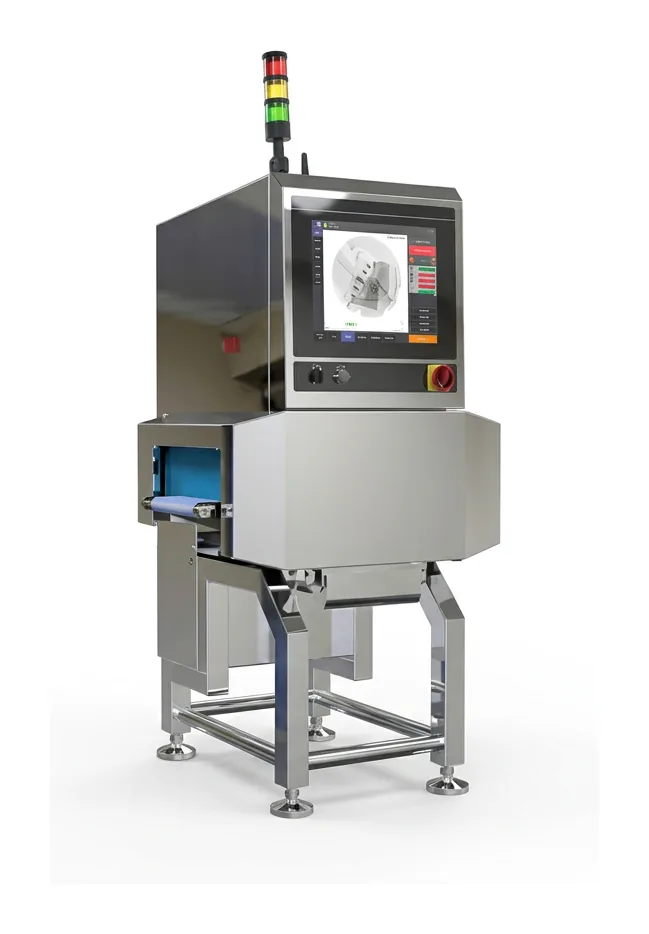
X-ray inspection: Do you need foreign-object checks, including in foil packs?
Q: When does X-ray fit? A: X-ray inspection addresses metal, glass, stone, bone and dense plastics, with fill and missing-item checks also available, including in foil packs. That makes it worth evaluating when your concern extends beyond metal or your packaging includes foil. Its fill and missing-item capabilities can also address questions that are not simply about total pack weight. However, do not interpret the material list as a promise to find every possible fragment. Define the actual contaminants and defects of concern, then test them in representative products and finished packs.
Q: When might another method fit better, and what should a buyer ask? A: If the requirement is specifically target-weight compliance, compare checkweighing rather than assuming an X-ray fill check is equivalent. For metal alone in non-metallized packaging, evaluate metal detection too. Ask which product and format changes require new inspection settings and how operators will verify those settings at changeover. Review cleaning access, the intended installation point and how failed packs will be removed and accounted for. Include normal product variation in the trial, not just neatly prepared samples.
Metal detection: Is metal the concern in a non-metallized pack?
Q: When is metal detection the right candidate? A: Metal detection finds ferrous, non-ferrous and stainless metal in non-metallized packs. It is a focused option when those materials are the identified foreign-object concern and the packaging fits that application. It does not address the broader glass, stone, bone and dense-plastic inspection requirement described for X-ray. Nor should it be selected to verify weight or label accuracy. Start with a clear metal-detection requirement rather than treating it as a general check of whether the pack is acceptable.
Q: What could rule it out, and what needs checking before purchase? A: Foil or metallized packaging falls outside the non-metallized-pack application described here; evaluate X-ray for that requirement. Ask how each product and pack combination will be tested for all three metal categories, and what settings or verification steps are needed after a changeover. Discuss the required production rate without assuming performance from another application. On the layout, review pack presentation, cleaning access and reject handling. If several products share the line, the evaluation should cover their differences rather than relying on one convenient sample.
Checkweighing: Must every pack meet a target weight?
Q: What problem does checkweighing solve? A: Checkweighing verifies every pack against its target weight and rejects under or over fills. Choose it when the acceptance decision is fundamentally about weight. A pack can look adequately filled yet still fall outside the defined weight limits, so appearance alone does not answer that question. Conversely, an acceptable weight does not establish that a pack is free of contaminants or carries the correct label. Checkweighing and foreign-object inspection therefore answer different questions and may both belong on the same line.
Q: What should be settled during specification and trials? A: Define the target and acceptance limits for each format, and establish how packaging-weight variation will be handled when interpreting finished-pack weight. Ask how operators select and verify the correct settings after a product or pack change. Review the proposed conveyor transfers, pack spacing and reject arrangement with the integration team, then trial representative packs under intended operating conditions. Cleaning procedures and access should also be reviewed against the actual product environment. Do not substitute an X-ray fill check for weight verification without first clarifying which acceptance requirement you need to satisfy.
Vision control system: Are labels, codes, lids or seals the concern?
Q: Where does camera inspection fit? A: A vision control system checks labels, codes, lids and seals by camera. It is the relevant candidate when the defect concerns those visible pack features rather than foreign objects or target weight. Define the check precisely: a label requirement and a code requirement are not interchangeable. For seals, agree on the observable defects the camera must identify. Do not treat a camera check as proof of every aspect of seal integrity simply because the seal appears acceptable.
Q: What can make vision unsuitable or difficult to integrate? A: The required feature must be presented for the intended camera check. Ask whether pack orientation, label position or format changes affect that presentation, and confirm the proposed arrangement using actual packs. Changeover planning should cover the correct label or code reference and any required camera or lighting adjustments. Review access for cleaning camera viewing surfaces and how failed packs will reach the reject point. If the underlying requirement is metal detection, broader foreign-object detection or weight verification, vision is not a replacement for those methods.
Final selection checklist
Before requesting a proposal, answer these questions: What exact defect must be caught? Which products, packaging materials and formats must run? What constitutes a failed pack? What production rate must the proposed configuration support? Which changes require new settings or physical adjustments? How will operators verify the setup? Include cleaning requirements and representative acceptable and defective samples in the project brief.
Then walk through the installation: available space, pack transfers, inspection location, reject handling, line controls and restart procedures. Pure Packaging Solutions engineers, specifies, supplies and integrates packaging equipment in the United States and Canada, helping connect the inspection requirement to the line arrangement. A product and pack trial is needed to confirm suitability. Use that trial to establish agreed acceptance criteria before committing to one method or a combination.