What does an automated clamshell packaging line include?
An automated clamshell packaging line can bring together four steps: separating stacked clamshells onto a conveyor, filling and closing them, applying labels, and packing finished clamshells into cases. Not every operation needs to automate all four at once. Compare each step against your current handling problems, product requirements, and format changes, then evaluate how the selected equipment will work together. Performance depends on the product, format, and configuration.
How does a denesting system fit clamshell feeding?
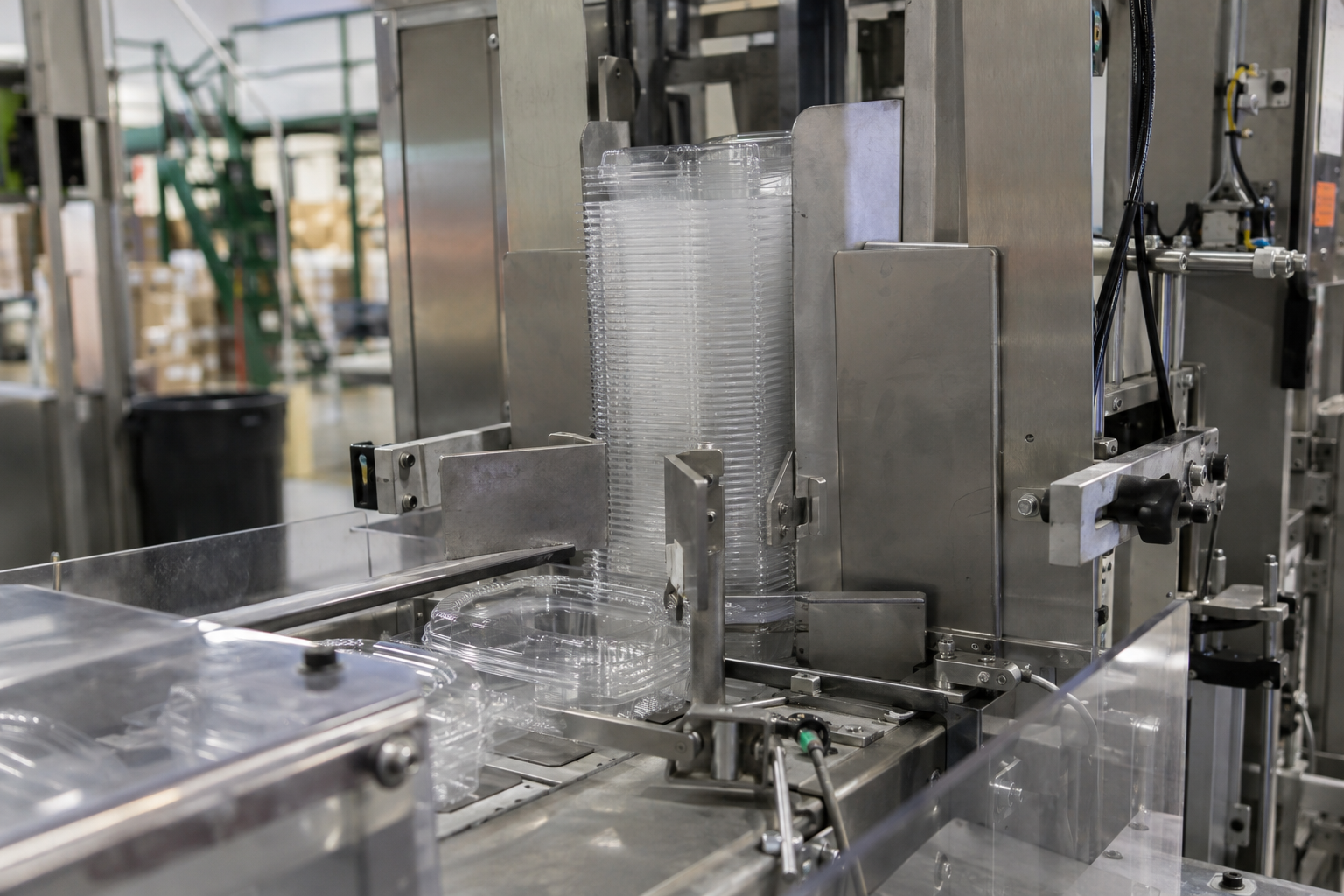
Q: What does it do, and when is it useful? A: A denesting system separates stacked clamshells onto the conveyor. It addresses the feeding step rather than filling or closing. Compare it with manual placement when operators spend considerable effort separating and presenting empty packs. The important question is whether your actual clamshells separate reliably and arrive in the condition and orientation required by the next step. Bring representative stacks to an evaluation, including packaging from different lots where possible. A trial with one carefully selected stack is not enough to establish suitability across your packaging range.
Q: When might it not fit, and what should a buyer ask? A: If your packs are not supplied in stacks, this method does not match the presentation described here. A broad mix of clamshell shapes also deserves closer evaluation before choosing automated feeding over manual placement. Ask what adjustments or format parts each changeover requires, how stack replenishment fits the operator's work, and how an unsuccessful separation would be handled. Confirm cleaning access around the pack path. At the conveyor interface, ask how feeding will respond when downstream equipment stops and how packs will be presented when production resumes.
What does a clamshell packaging machine handle for bakery and produce?
Q: Which application does it serve? A: A clamshell packaging machine fills and closes clamshells for bakery and produce. Combining those operations is worth evaluating when both product placement and closure need a coordinated process. Bakery and produce should not be treated as interchangeable applications, however. A delicate baked item and an irregular produce item raise different handling questions. Ask how your product will be presented for filling, what placement is required inside the pack, and what constitutes an acceptable closed clamshell. Evaluate product appearance and closure quality together, rather than accepting a closed pack as the only measure of success.
Q: When should you consider a different approach? A: Manual or partly automated handling may remain worth comparing if products vary substantially or need individual arrangement. Do not assume every bakery or produce item is suitable simply because it falls within those categories. Ask which product and clamshell changes require adjustments, how settings will be recorded, and what trial conditions will represent routine production. Review access for cleaning wherever product or debris could collect. For line integration, establish responsibility for delivering product and empty clamshells to the filling step, and confirm the closed pack presentation needed by the labeling operation.
Which labeling approach fits a closed clamshell?
Q: How do top, C-wrap, and tamper-evident labels compare? A: The labeling system applies top, C-wrap, or tamper-evident labels across the closed clamshell. Start with the label's job rather than choosing by appearance alone. A top label is a candidate when the required information belongs on the top face. Consider a C-wrap when the intended presentation calls for a label around the pack profile. If evidence of opening is required, evaluate a tamper-evident label arrangement against the actual opening path. These choices are not interchangeable, and no label style is the universal best option.
Q: What could make a label approach unsuitable? A: The selected label must work with the clamshell surface, geometry, and intended placement. Raised features, curves, or moisture warrant testing rather than assumptions about adhesion. Ask for labeled samples using your actual pack and label materials, then inspect placement, readability, and behavior during handling and opening. For changeover, ask what changes when pack dimensions, label dimensions, or label style change. Review cleaning access and label material handling. At the line interface, confirm that closed clamshells arrive consistently and ask how labeling will respond to gaps or stops in the incoming flow.
When does automatic case packing belong in the line?
Q: What does automatic case packing add? A: It packs finished clamshells into cases. This is a separate decision from automating the individual retail pack: a line can automate filling and closing while retaining manual case loading. Compare the approaches using your case patterns, pack mix, and handling requirements. Ask whether the proposed arrangement can place your finished clamshells into the required case without compromising their condition. Include labeled, filled packs in the evaluation. Empty clamshells alone cannot establish how the finished package will behave during case loading.
Q: When might manual case packing remain appropriate? A: Frequent changes in case contents or packing patterns can make manual loading worth retaining, particularly until the proposed automated arrangement has been demonstrated. Ask what each case and clamshell changeover involves and which combinations are included in the proposal. Do not assume that packing clamshells into cases also includes preparing or sealing those cases; define those responsibilities separately. Review cleaning access for areas exposed to damaged packs or spilled product. Confirm how finished clamshells reach the case-packing step and what happens upstream when case loading is interrupted.
What should be on your final selection checklist?
Before comparing proposals, list every product, clamshell, label, and case combination you expect to run. Identify which steps will be automated and which will remain manual. Define acceptable product condition, closure, label placement, and case presentation. Request a changeover review, a cleaning-access review, and a clear description of every handoff between machines.
Pure Packaging Solutions engineers, specifies, supplies, and integrates packaging equipment in the United States and Canada. A product and pack trial is needed to confirm suitability, using representative materials and realistic operating conditions. Agree on acceptance criteria before the trial, including required output for each configuration, then document the results. Choose the combination that meets your application, not the one with the longest equipment list.