Start With the Constraint That Can Stop Production
If product reaches the seal area before the jaws close, nominal machine capacity is beside the point. A dusty powder, stringing lotion or bouncing snack can turn an otherwise straightforward premade pouch application into a filling and sealing problem. Establish the limiting condition before comparing equipment.
Define the operating envelope using actual products and finished packages. Include fill weights, product temperatures, viscosity changes, particle characteristics, pouch dimensions and acceptable headspace. For dairy and other perishable products, also establish allowable exposure conditions and the required hygienic process. A pouch machine does not independently provide a validated preservation process.
Separate requirements from preferences. Package integrity, label accuracy and product protection are release criteria. A preferred layout or changeover method may be negotiable. This distinction prevents an attractive machine arrangement from becoming the basis for an unsuitable process.
Choose the Filling Method Before Fixing the Machine Layout
Four engineering decisions that determine the filling station
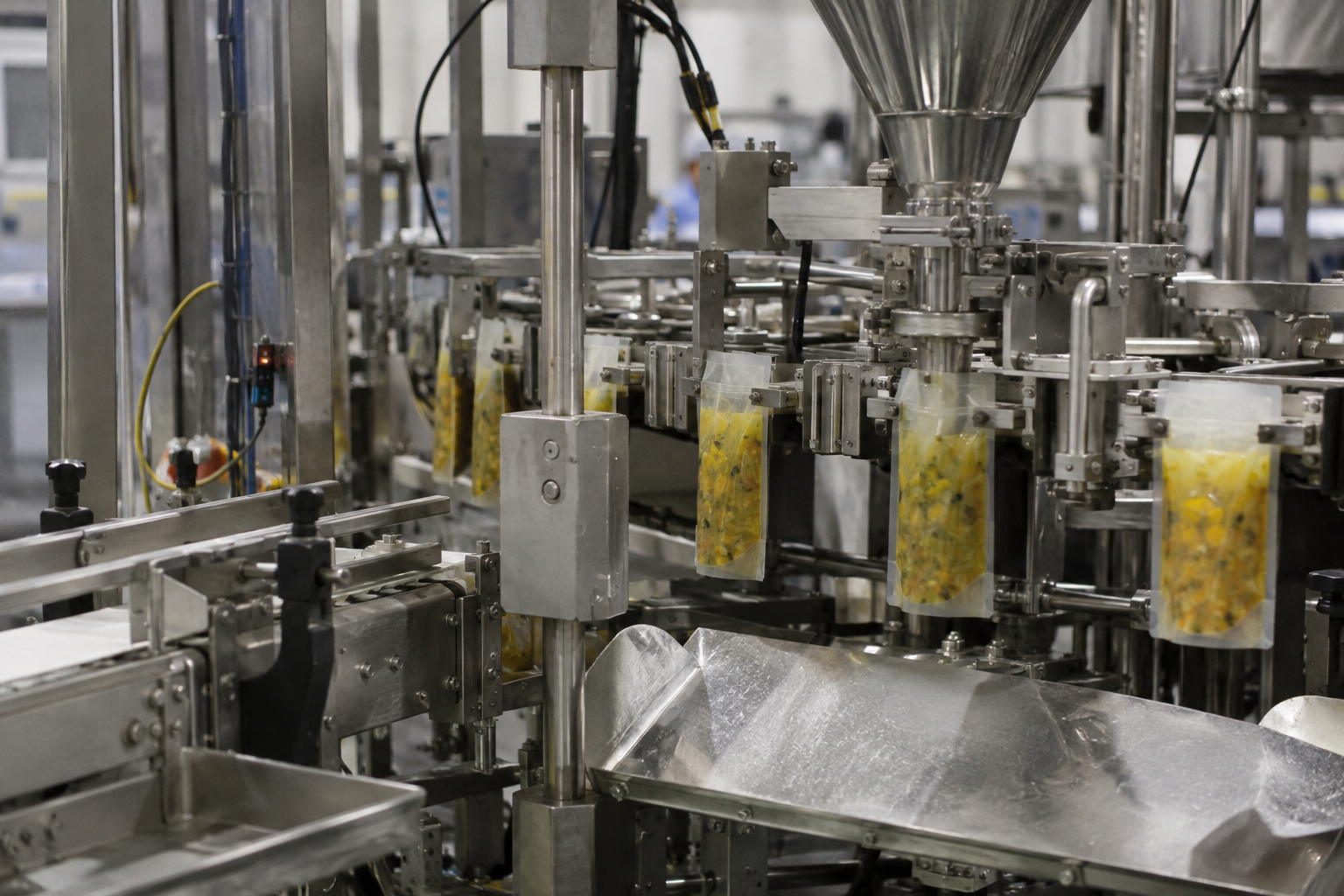
Select a dosing approach from product behavior, then determine how it integrates with pouch presentation. Pumpable products may need controlled nozzle withdrawal or cutoff. Powders may need dust management. Discrete products may need a transfer path that limits breakage and bridging. Confirm these choices through trials rather than selecting equipment from a product category alone.
- Characterize the difficult product condition. Test relevant temperature extremes, settled powder, aerated liquid or sticky particulates. A filler that performs well on an easy sample may struggle after a production hold.
- Check the usable pouch opening. Account for zipper position, gusset geometry and the space needed by nozzles or funnels. Nominal pouch width is not the same as unobstructed filling clearance.
- Control the product trajectory. Assess drop height, splash, dust and settling before sealing. Decide whether nozzle movement, staged delivery or a settling step is needed to keep the seal band clean.
- Define fault responses. Verify how the system detects a missing or inadequately opened pouch and inhibits filling. Establish how incomplete fills and interrupted cycles are identified, rejected and reconciled.
Treat the Pouch as a Machine Component
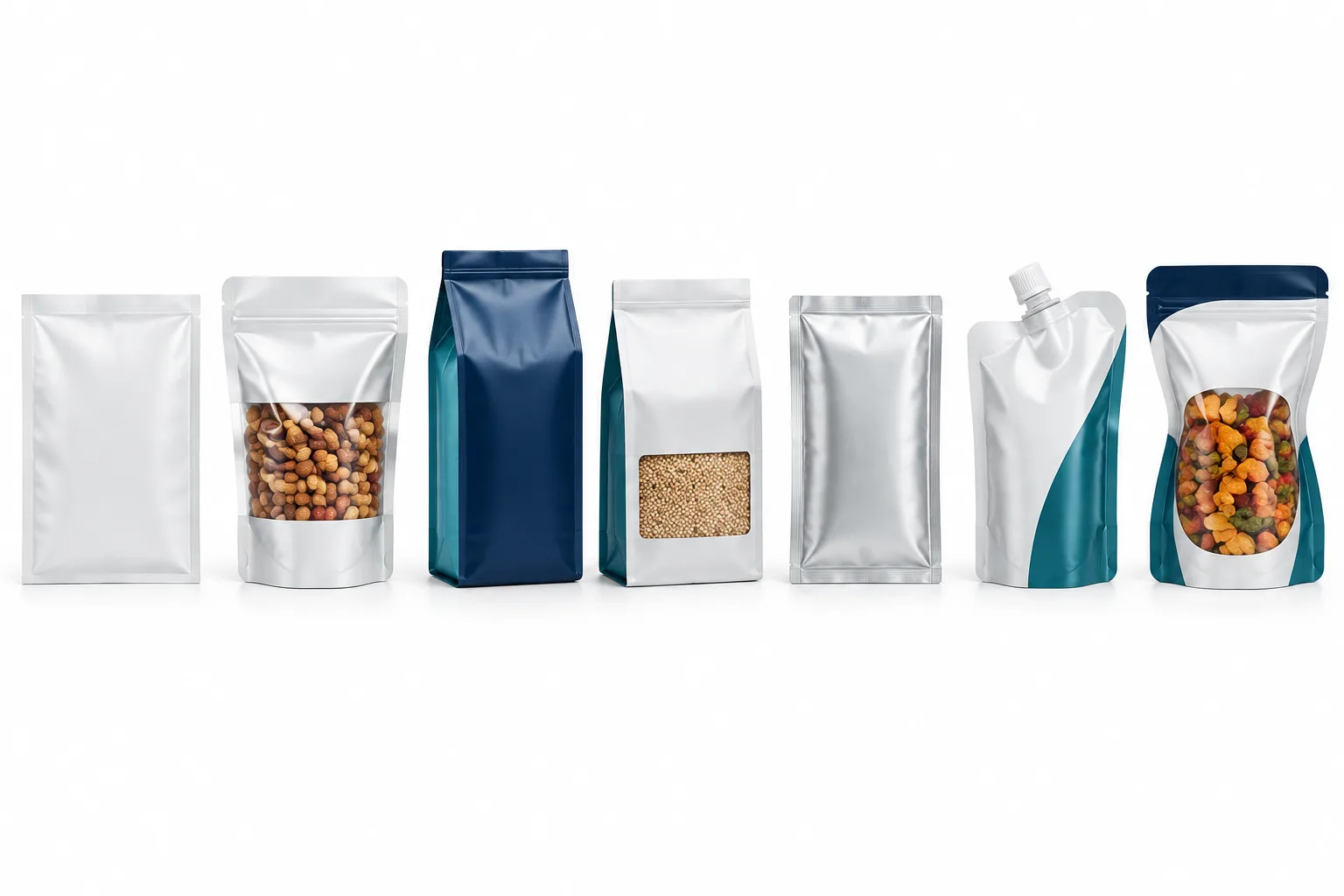
Premade pouches arrive finished, but they are not mechanically identical. Curl, stiffness, surface friction, dimensional variation and zipper construction affect magazine feeding, pickup, opening and gripping. Obtain the pouch supplier's tolerances and trial samples representative of normal production, not only carefully selected samples.
Follow a pouch through every transfer. Look for consistent pickup, adequate grip below the seal area and stable support as the product enters. A pouch that opens reliably when empty may distort under load. Bottom gussets may also need help deploying before the filled package can stand or discharge predictably.
Plan format changes around physical adjustments, not just recipe recall. Identify gripper settings, magazine guides, filling tooling and discharge supports that must change. Record reference positions and confirmation checks. If operators must repeatedly improvise to run an approved pouch, investigate the interface rather than treating adjustment as normal.
Prove the Seal Under Real Operating Conditions
Use the pouch supplier's sealing guidance as a starting point, not a complete process specification. Seal performance depends on the laminate, jaw condition, alignment, temperature, pressure, dwell and contamination. Zippers are generally reclosure features, not substitutes for the required final seal.
Develop a sealing window with representative filled pouches. Evaluate packages after startup, normal running, short stops and restart. Inspect for wrinkles, trapped product and inconsistent seal appearance, then apply integrity and strength tests appropriate to the package and its risks. Visual inspection alone cannot establish barrier integrity.
Decide how evidence will be retained. Record relevant settings, test methods and disposition rules for questionable packages. Pharmaceutical applications may require additional qualification and documented controls. Define those obligations with quality personnel before equipment acceptance, including which checks are automatic and which depend on operator sampling.
Accept the Whole Operating Cycle, Not Just a Good Run
Build acceptance trials around routine disruption. Include pouch replenishment, product replenishment, downstream blockage, fault recovery and a representative format change. Measure usable output over the agreed trial period, recording rejects and stoppage causes. A brief uninterrupted demonstration says little about sustained production.
Walk through cleaning and maintenance with the people responsible for them. Check access to product-contact parts, spill collection, utilities, guarding and inspection points. Match cleaning methods to the product risk and equipment design. For allergen changes or wet cleaning, define verification and drying requirements before estimating available production time.
For a structured application review, visit the Pure Packaging Solutions [Premade Pouch Packaging page](/solutions#premade-pouch-packaging) or request a quote with pouch samples, product characteristics and acceptance criteria. Those inputs make the discussion an engineering evaluation rather than a comparison of nominal machine capabilities.