1. Define the Production Job Before Selecting Machines
Start with a product and package matrix, not an equipment list. Document container materials, dimensions, closure styles, label requirements, case patterns and pallet configurations. Include the characteristics that affect handling, such as unstable bases, flexible walls, foaming products or surfaces that become slippery when wet. A package that runs comfortably through one machine may behave differently during conveyor transfers, accumulation or case packing.
Next, define what the line must deliver during an actual production schedule. Account for product mix, batch sizes, sanitation, changeovers, staffing and planned maintenance. Distinguish the required output of saleable finished goods from the nominal capability of individual machines. Identify which requirements are mandatory and which are preferences. This gives engineering and operations a common basis for evaluating proposals without assuming that every product will run under identical conditions.
2. Engineer the Connections as Carefully as the Machines
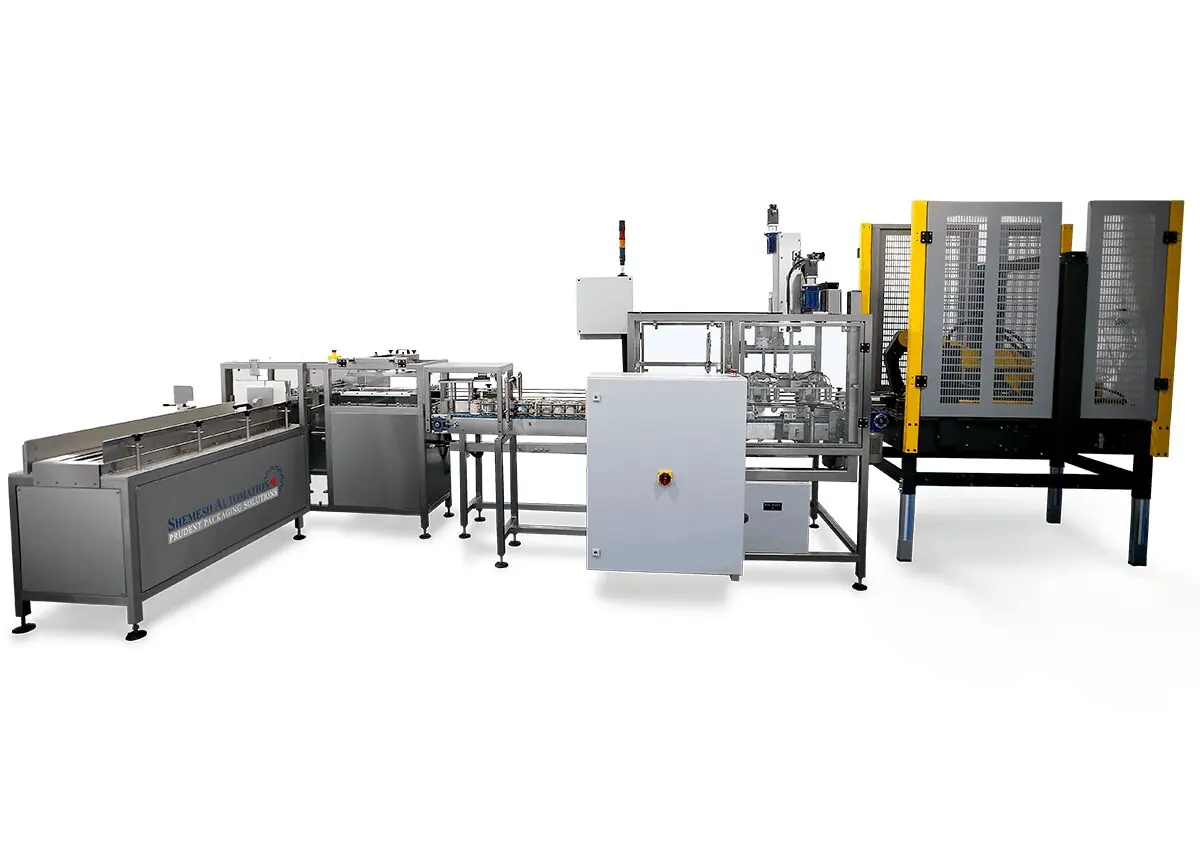
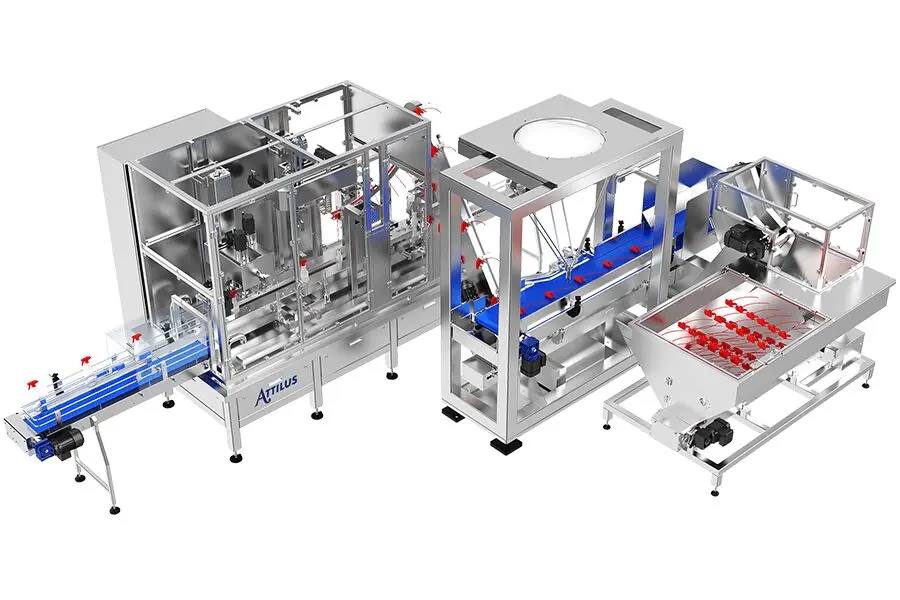
Most complete lines include equipment with different operating cycles and control philosophies. Review every handoff, including conveyor elevations, guide arrangements, container spacing, transfer gaps and product orientation. Assign responsibility for transitions explicitly. If a bottle tips between the filler discharge and the labeler infeed, the ownership boundary between suppliers will not help the operator recover production. The interface needs an accountable designer and a testable requirement.
Controls deserve the same attention. Establish how machines communicate ready, running, blocked, starved and fault conditions, and define the expected response to each. Agree on restart sequences, recipe selection, reject confirmation and operator messaging. Coordinate emergency stop zones and safety functions through the applicable risk assessment. Local machinery compliance does not, by itself, establish that the assembled line has been assessed for safe operation as a system.
3. Use Accumulation to Manage Interruptions, Not Hide Problems
The machine with the lowest sustainable capability often limits output, but recurring short stops can shift the practical constraint. Evaluate what happens when a label roll needs attention, a case magazine runs low or downstream equipment pauses. Accumulation can keep an upstream process running through some interruptions. Its useful capacity depends on the interruption duration, available recovery capability and how much handling the product can tolerate.
Do not size buffers from floor space alone. Determine whether packages can withstand contact pressure, dwell time and repeated starts. Confirm that downstream equipment can clear accumulated product without creating another unstable condition. For temperature sensitive products or processes with hold time restrictions, involve quality personnel before adding storage between operations. Persistent jams and poor material presentation need correction at their source, not a larger conveyor to conceal them.
4. Plan the Layout for the People Who Run It
A layout should show more than machine footprints. Mark operator positions, material replenishment routes, reject collection, cleaning access and maintenance withdrawal space. Check whether a technician can remove a component without dismantling adjacent guarding or blocking an aisle. Review utilities at their connection points, including pressure, quality, drainage and electrical requirements as applicable. Verify these needs against available plant capacity rather than assuming existing services are sufficient.
Walk through a complete changeover with operations, maintenance and sanitation teams before approving the arrangement. Consider where change parts will be stored, how settings will be verified and whether adjustments require awkward access. For food and dairy applications, review cleanability and product exposure. For pharmaceutical and other controlled applications, address line clearance, identification and record requirements with the quality team. Design decisions should reflect the site's actual procedures and obligations.
5. Define Acceptance Before Installation Starts
Write acceptance criteria while the scope is still being developed. Specify representative products and packaging materials, test conditions, staffing assumptions and how output, rejects and downtime will be recorded. Include difficult formats and recovery from realistic interruptions, not only steady running with the easiest package. Separate checks that can be completed before shipment from those requiring site utilities, upstream product supply or downstream integration. Assign responsibility for resolving outstanding items.
After startup, track recurring stops by cause and use that information to prioritize improvements. Keep approved settings, training materials and maintenance tasks aligned with the installed equipment. A complete line needs clear ownership after commissioning, not just during procurement. To discuss a defined project scope with Pure Packaging Solutions, visit the Complete Packaging Lines page at /complete-lines, where you can also request a quote.